
Short surahs with transliteration & meaning
Al-Fatiha, Ayat al-Kursi and the last surahs of the Quran — in Indo-Pak Arabic with transliteration, clear English meaning, background, virtues and tajweed tips.
The short surahs most children learn first are Al-Fatiha and the last surahs of the Quran — An-Nas, Al-Falaq, Al-Ikhlas, Al-Masad, An-Nasr, Al-Kafirun, Al-Kawthar, Al-Ma'un, Quraysh, Al-Fil, Al-Humazah and Al-Asr — plus Ayat al-Kursi. Tap any surah to read it verse by verse with meaning.
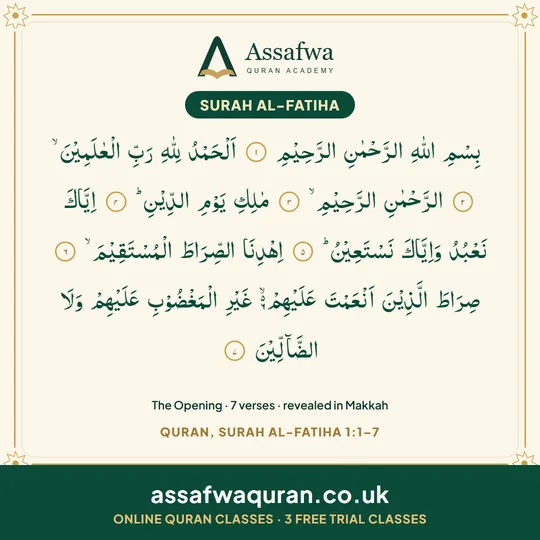 7 verses · Makkah
Surah Al-Fatiha
الفاتحة
The Opening — Al-Fatiha is a conversation with Allah: we praise Him, declare that we worship Him alone, and ask…
Read with meaning →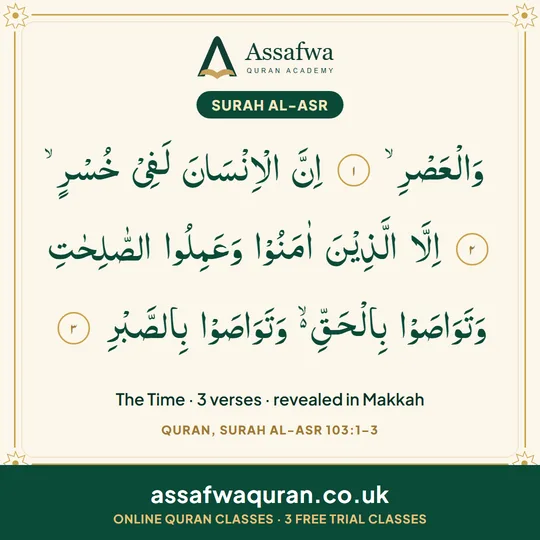 3 verses · Makkah
Surah Al-Asr
العصر
The Time — In just three verses, Al-Asr gives the recipe for success: faith, good deeds, encouraging the truth…
Read with meaning →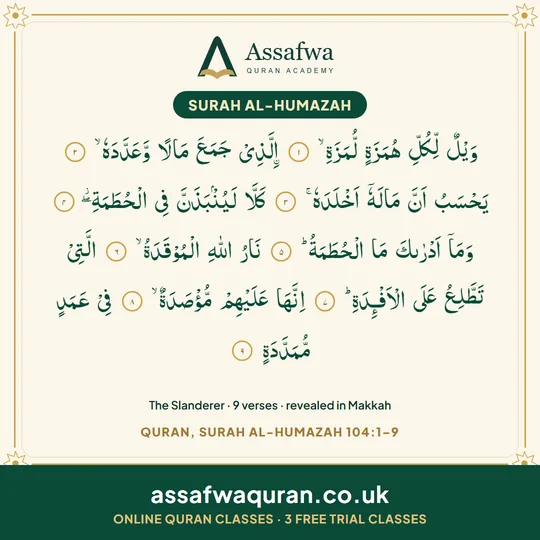 9 verses · Makkah
Surah Al-Humazah
الهمزة
The Slanderer — Al-Humazah warns against mocking and backbiting people, and against loving money as if it could…
Read with meaning →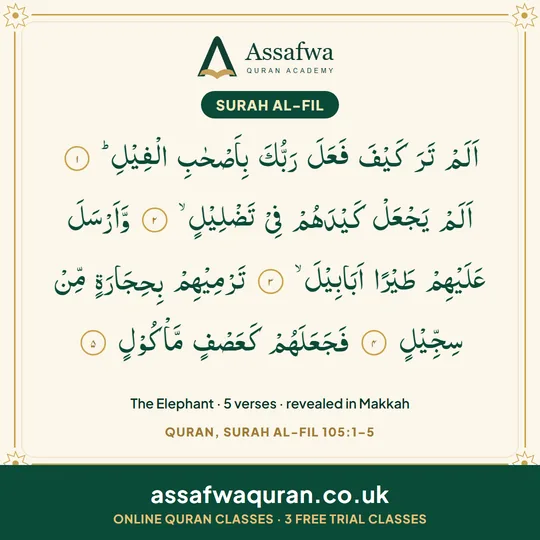 5 verses · Makkah
Surah Al-Fil
الفيل
The Elephant — Al-Fil tells how Allah protected the Kaaba from an army that came with an elephant to destroy it.
Read with meaning →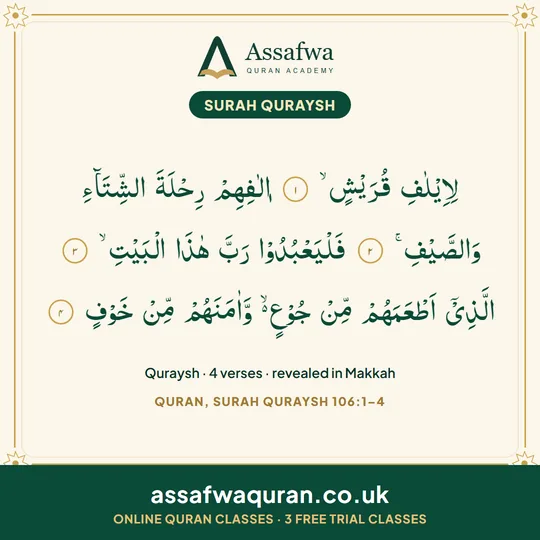 4 verses · Makkah
Surah Quraysh
قريش
Quraysh — Surah Quraysh reminds the people of Makkah of Allah's blessings — food and safety — and asks them…
Read with meaning →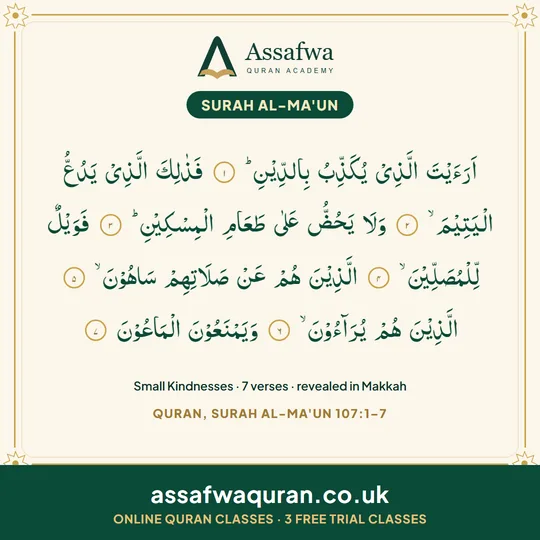 7 verses · Makkah
Surah Al-Ma'un
الماعون
Small Kindnesses — Al-Ma'un teaches that real faith shows in how we treat orphans and the poor, and in praying…
Read with meaning →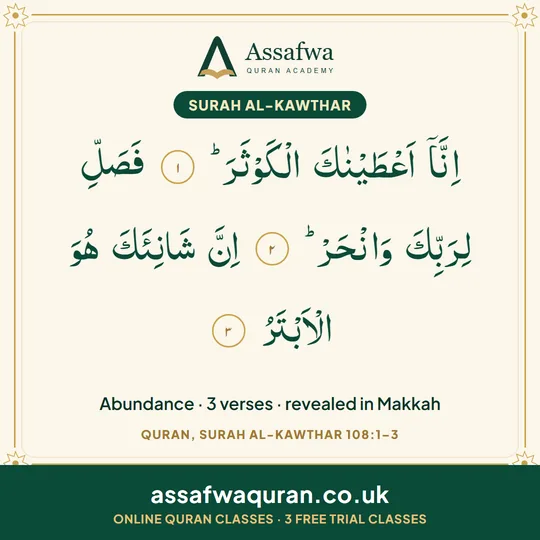 3 verses · Makkah
Surah Al-Kawthar
الكوثر
Abundance — Al-Kawthar, the shortest surah, is a gift and comfort to the Prophet ﷺ: Allah has given him…
Read with meaning →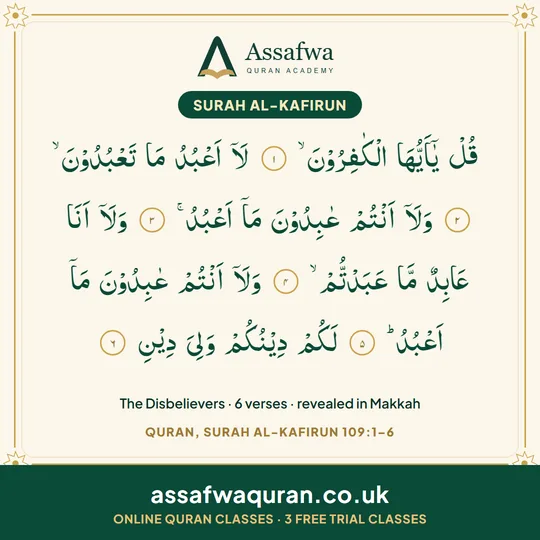 6 verses · Makkah
Surah Al-Kafirun
الكافرون
The Disbelievers — Al-Kafirun makes it clear that a Muslim worships Allah alone and does not mix worship with anything…
Read with meaning →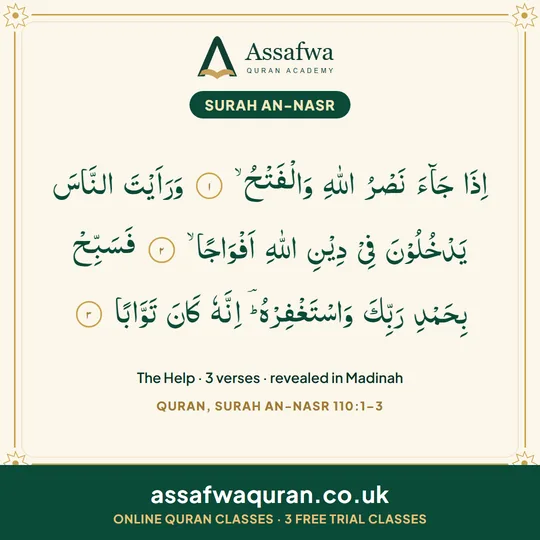 3 verses · Madinah
Surah An-Nasr
النصر
The Help — An-Nasr teaches that when success comes, we should glorify Allah and ask His forgiveness — not…
Read with meaning →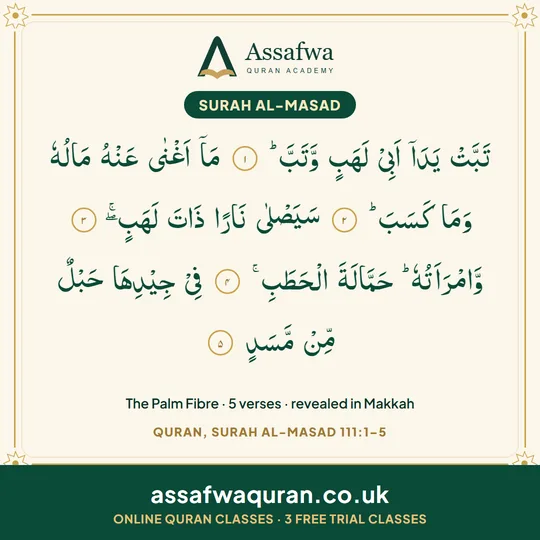 5 verses · Makkah
Surah Al-Masad
المسد
The Palm Fibre — Al-Masad is about Abu Lahab, the Prophet's ﷺ uncle, who fought against Islam — showing that family…
Read with meaning →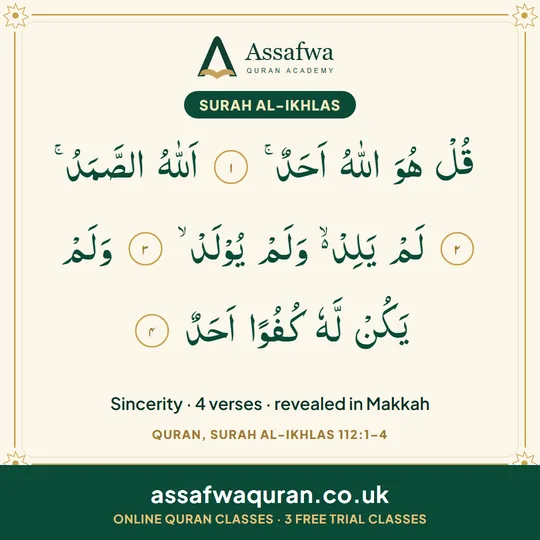 4 verses · Makkah
Surah Al-Ikhlas
الإخلاص
Sincerity — Al-Ikhlas describes Allah in four short verses: One, depended on by all, with no parent or child,…
Read with meaning →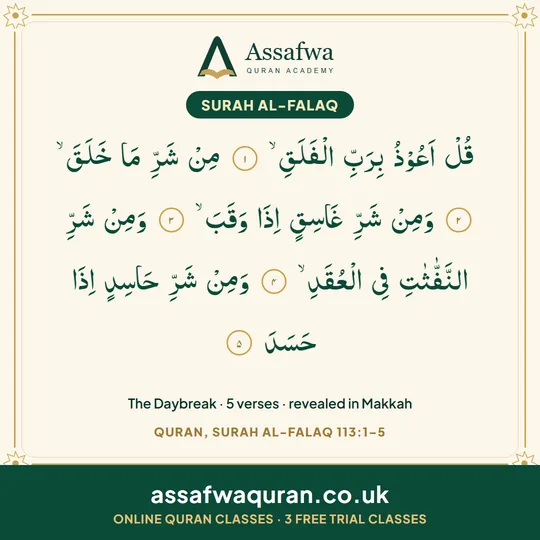 5 verses · Makkah
Surah Al-Falaq
الفلق
The Daybreak — Al-Falaq is a surah of protection: we ask Allah to protect us from harm, darkness, magic and envy.
Read with meaning →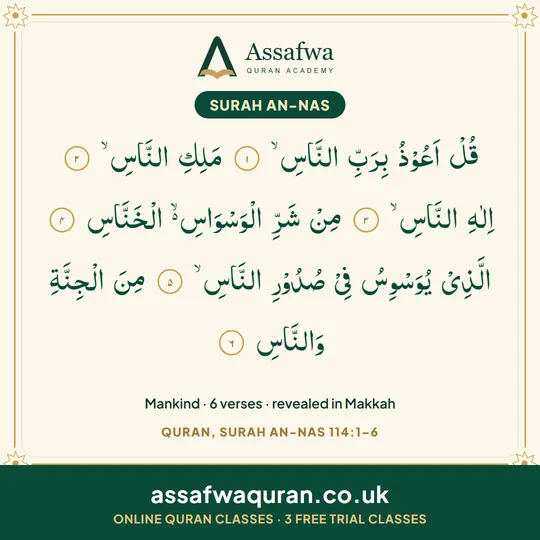 6 verses · Makkah
Surah An-Nas
الناس
Mankind — An-Nas, the last surah of the Quran, asks Allah to protect us from the whispers of Shaytan.
Read with meaning →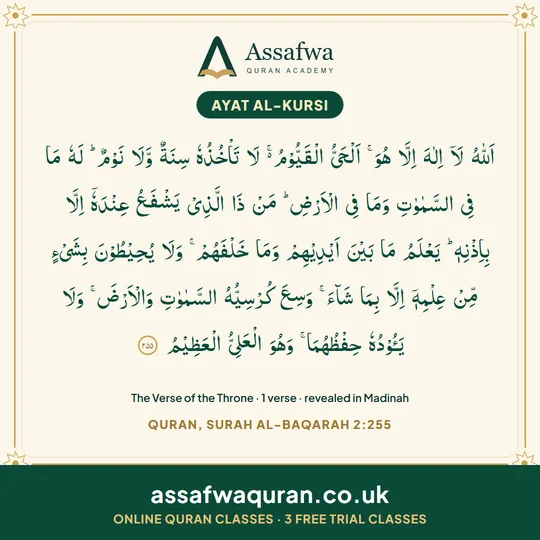 1 verse · Madinah
Ayat al-Kursi
آية الكرسي
The Verse of the Throne — Ayat al-Kursi, verse 255 of Surah Al-Baqarah, describes Allah's greatness, knowledge and power over…
Read with meaning →
Questions about short surahs
Which short surahs should children learn first?
Most children start with Al-Fatiha, then the last surahs of the Quran: An-Nas, Al-Falaq, Al-Ikhlas, Al-Masad, An-Nasr, Al-Kafirun and Al-Kawthar. They are short and used in daily Salah.
How can my child memorise short surahs?
Learn one verse at a time, listen to a good reciter, repeat it in Salah, and revise old surahs every day. A teacher helps correct Tajweed early.
Are these translations word-for-word?
They are clear English meanings written for children and families. For detailed study, read a full translation and tafsir alongside.
Which surahs are recited before sleeping?
The Prophet ﷺ recited Al-Ikhlas, Al-Falaq and An-Nas, blew into his hands and wiped over his body before sleeping (Sahih al-Bukhari 5017). Ayat al-Kursi is also recited before sleeping (Sahih al-Bukhari 2311).
Learn the surahs with Tajweed
One-to-one Quran lessons for children and adults — start with 3 free trial classes.